Beginner RC Buying Guide: Planes, Cars & Helicopters
A beginner RC buying guide comparing RC planes, cars, and helicopters — RTR vs. kit, electric vs. nitro/gas, transmitter channels, and the mistakes that make most new hobbyists quit early.
RTR vs. kit: what beginners should buy
A beginner RC buying guide exists because most first-time RC hobbyists overspend on the wrong scale, skip a critical stability feature, or buy a model with no local parts support — and quit within a month. This guide from Toyvado breaks down planes, cars, and helicopters side by side so you can pick the right first RC vehicle instead of guessing.
For those exploring other beginner hobbies, our beginner's guide to choosing building brick sets follows the same framework to help you make informed purchases.
Start RTR, start electric, start small
If you take one thing from this beginner RC buying guide, take this: choose an electric, Ready-to-Run model in a common scale before you buy anything that needs assembly, fuel, or specialized tuning knowledge.
What you'll learn
- Why RTR (Ready-to-Run) beats a kit for your first RC vehicle
- How to decide between an RC plane, car, or helicopter as a starting point
- Electric vs. nitro/gas power — which is actually easier to own
- What transmitter channel count you actually need
- The seven mistakes that make most beginners quit early
RTR vs. kit: what beginners should buy
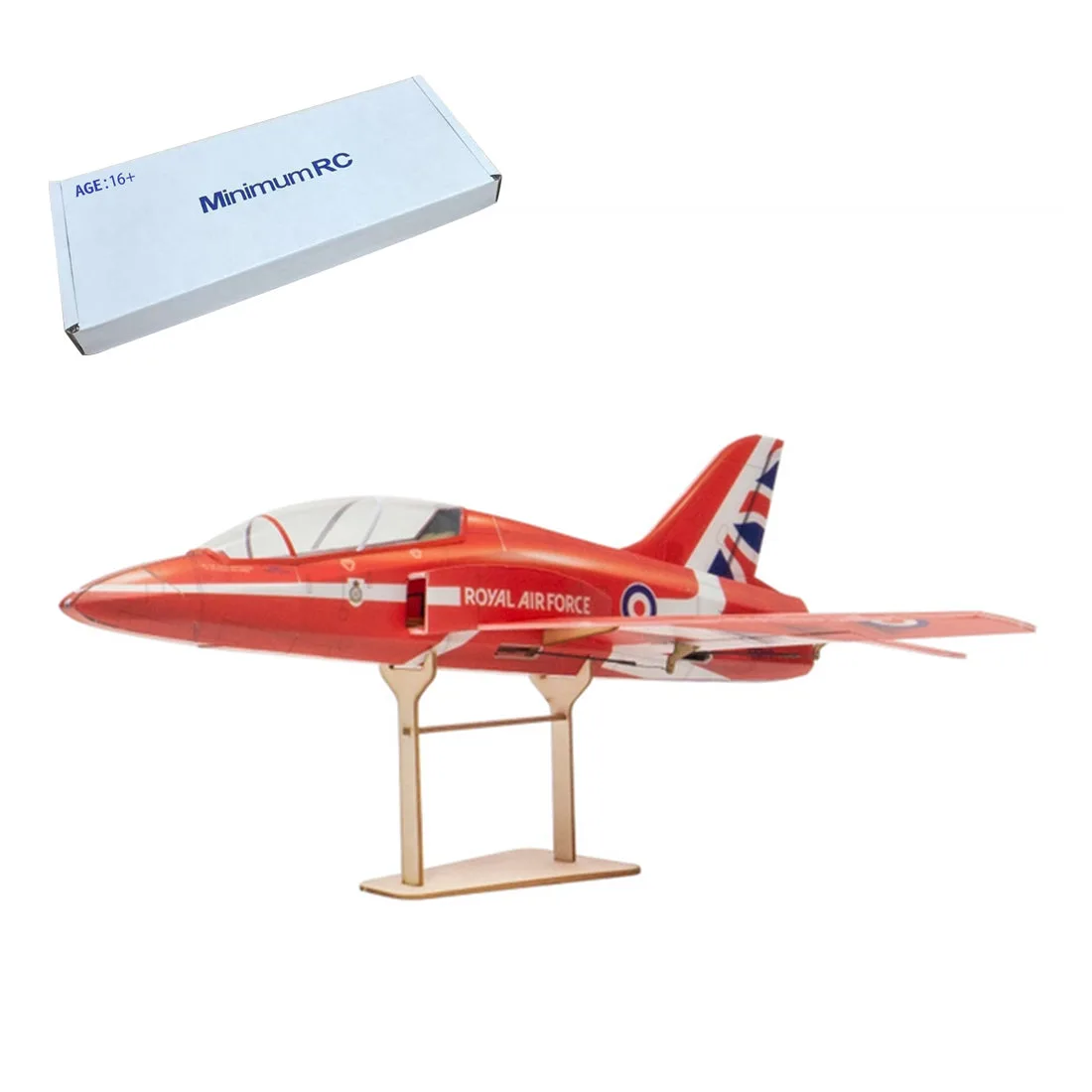
Every RC vehicle — plane, car, or helicopter — comes in one of two formats: Ready-to-Run (RTR) or a kit. RTR models arrive fully pre-assembled from the factory: chassis built, body finished, electronics pre-installed. Most RTR aircraft need only a battery charge and basic transmitter setup, roughly five to fifteen minutes, before their first flight or drive. Kits, by contrast, are boxes of unassembled parts for builders who want to learn how the vehicle works from the ground up — they typically exclude electronics entirely (radio, ESC, motor, batteries) and demand real build time and technical knowledge.
For someone starting from zero, RTR is the clear recommendation. It removes the technical barrier between unboxing and flying or driving, so you learn the actual skill — piloting or driving — instead of getting stuck troubleshooting a build. Save kits for after you already understand the fundamentals and want a hands-on project.
Planes, cars, or helicopters — which first?
This is the question every beginner RC buying guide should answer honestly: each category rewards a slightly different kind of patience, and picking the one that matches your space and tolerance for crashes matters more than picking the "coolest" vehicle.
RC airplanes for beginners
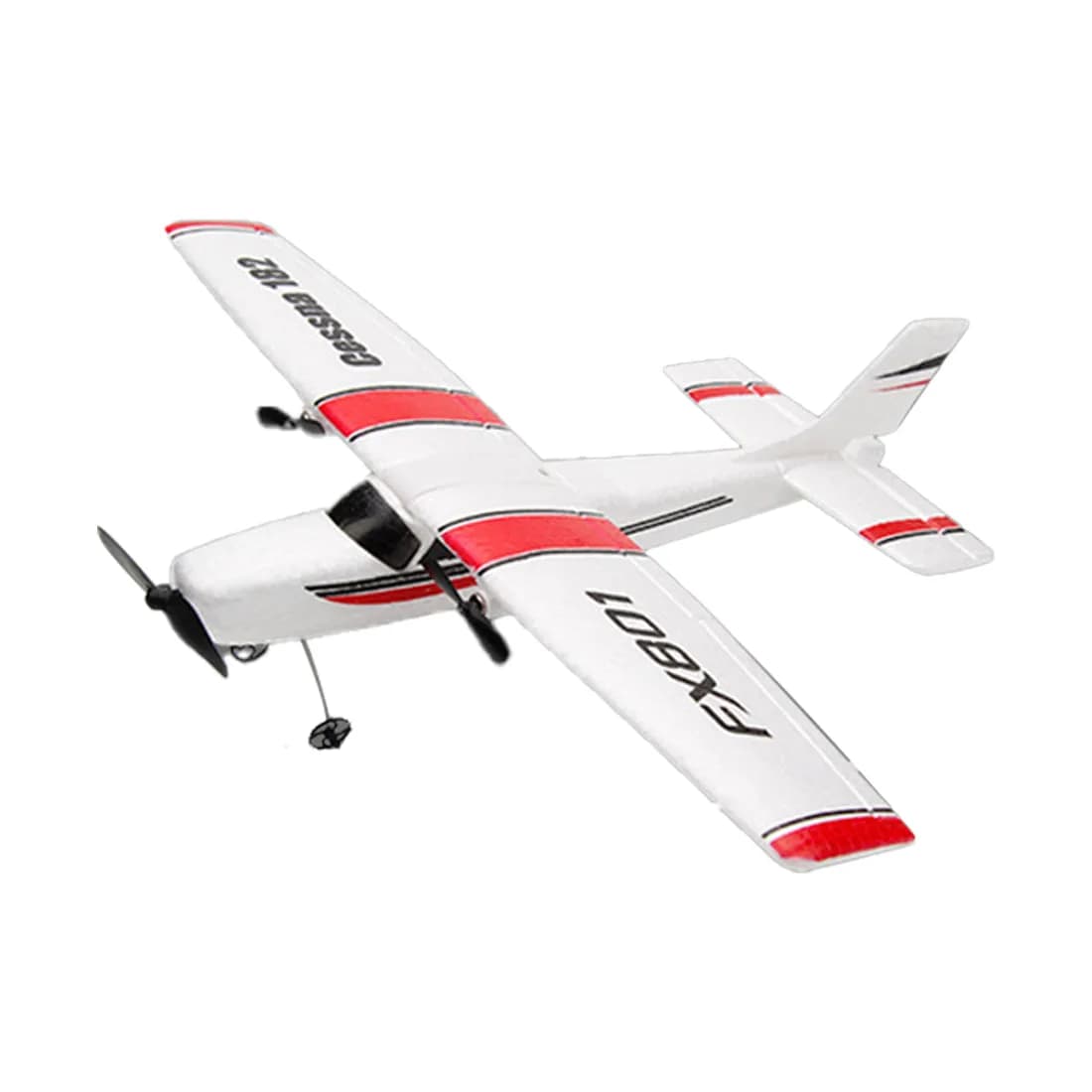
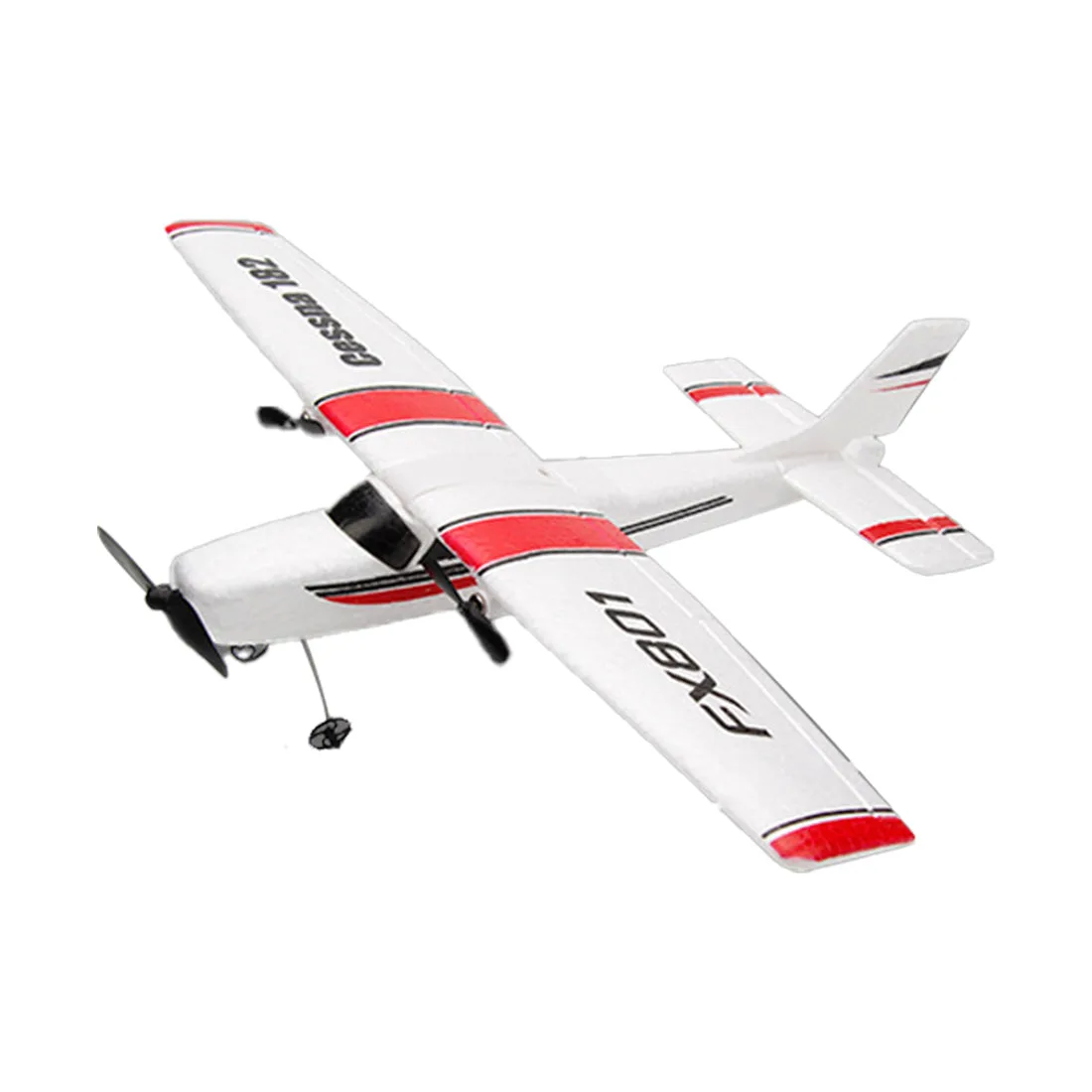
RTRhobby is an online retailer that carries RC products spanning beginner to advanced hobby grade — electric airplanes, gas/nitro cars, scale helicopters, and even flight simulator hardware, positioned for novices through experts. The brand supports pilots from complete beginners to advanced hobbyists with dedicated customer service. A good first plane, like the FX-801 Cessna 182, uses light, collision-resistant EPP foam construction with a de-propeller guard, a 2.4GHz control system, and roughly a 15-minute flight time per charge, with minimal assembly required out of the box. It's built specifically for novice pilots who need forgiving, durable construction while they learn.
Separately, a slower, glider-style option such as the FX-815 electric glider is marketed specifically as a cost-effective entry point for people brand-new to RC airplanes, emphasizing stable, predictable flight characteristics for learning basic piloting skills over speed or aerobatics. Elsewhere in the market, established beginner trainers use SAFE-style flight-envelope protection and panic-recovery modes to help new pilots avoid unrecoverable mistakes, an approach seen in models like the E-Flite Apprentice and HobbyZone Sport Cub, both of which use automatic stabilization to help new pilots escape difficult situations. Look for that kind of stabilization language on any first plane you consider. For additional options in the drone and aircraft space, Makerfire's RC collections from Happymodel and MJX offer quality beginner and intermediate models across different categories.
RC cars for beginners
Scale matters more than most beginners expect. 1/10 scale is the industry standard and generally the safest, most practical choice for a first RC car, thanks to ubiquity, abundant aftermarket parts support, manageable storage, and easy transport to driving locations — larger 1/5 scale models can reach three feet long and create real storage and cost headaches during the learning phase. Beginners should prioritize accessibility and durability of replacement parts over raw scale or performance specs.
Within 1/10 scale, the beginner-friendly build is electric power, a brushed motor (more affordable and forgiving than brushless), NiMH batteries (simpler to handle safely than LiPo), and RTR format for minimal setup. This combination balances practicality with performance and taps into the widest aftermarket support available for any RC car scale. If you're looking for affordable beginner RC cars from Rlaarlo, the brand's 1/10 and 1/12 scale models deliver strong value at budget-friendly prices.
RC helicopters for beginners
Helicopters are the least forgiving of the three categories, so environment matters as much as the model itself. Micro and mini helicopters, under roughly 200mm in fuselage length, are purpose-built for indoor flying in gyms, warehouses, or large rooms where wind is minimal and crashes cause less damage. Larger, 200mm-plus standard helicopters need more space and are meant for outdoor flying, but they demand more piloting skill and get pushed around by wind — beginners should start indoors on a micro/mini model before progressing outdoors.
Whichever size you pick, prioritize gyroscopic stabilization and altitude hold — both reduce pilot workload and improve safety while hovering. Coaxial rotor helicopters are widely considered the easiest to fly because the dual-rotor design provides inherent stability, hovering almost on its own and moving slowly enough that a beginner has time to react. Most beginner helicopters fly five to fifteen minutes per charge, and a second battery can extend a session to 20–40 minutes total.
Electric vs. nitro/gas
This decision applies mainly to RC cars, and for a first vehicle the answer is straightforward: go electric. Electric RC cars need only battery charging and a simple startup — no fuel, no engine tuning, no post-run maintenance routine. They deliver instant torque and quiet operation in more locations, so a beginner can focus entirely on driving and learning instead of diagnosing an engine.
Nitro and gas RC cars have real advantages — longer run times because they're fuel-based rather than battery-limited, plus a more immersive experience with real engine sound and hands-on tuning that dedicated enthusiasts enjoy. But nitro also demands regular technical maintenance, engine tuning, ongoing fuel costs, and specialized mechanical knowledge that most first-time owners don't have yet. Save nitro for your second or third RC car, once you already understand how to drive and maintain the basics.
Understanding transmitter channels
A "channel" is one function and one distinct communication line between your transmitter and the vehicle's receiver — throttle, aileron, elevator, and rudder are the standard flight controls on an airplane. Beginners can technically learn on a 3-channel trainer plane, but a 4-channel radio is the real minimum for controlling all basic flight functions, and many retailers recommend buying a 6-channel transmitter from day one so you don't need to replace it as your skills advance from a basic trainer to an intermediate sport plane with flaps and retractable gear.
Helicopters have their own channel logic: 2–3 channel helicopters can actually confuse beginners despite offering basic directional control, while a proper collective-pitch helicopter needs a minimum of six channels to fly correctly and safely. If you're buying a transmitter separately from an RTR bundle, six channels is the safer long-term investment for either category.
Common beginner mistakes to avoid
New RC hobbyists tend to make the same handful of avoidable mistakes, regardless of whether they start with a plane, car, or helicopter.
- Chasing speed before control. Beginners should cap their first RC vehicle around 10–15 mph to master throttle and steering before advancing to faster models.
- Skipping the manual. Instructions contain critical setup, maintenance, and safety information that isn't obvious from the box.
- Mishandling batteries and chargers. NiMH and LiPo batteries require different charging approaches — verify the correct battery and charger are included before you buy.
- Neglecting basic maintenance. Vibration loosens screws and wheel nuts; check them before every session, especially on a new vehicle.
- Installing incompatible upgrades too early. Overpowered motors can damage stock transmissions, and undersized steering servos burn out on heavier vehicles.
- Buying the wrong vehicle for the terrain. Some RC cars are built for smooth surfaces, others for dirt or grass — a mismatch leads to poor performance and early damage.
- Ignoring storage and transport reality. Overestimating desired speed and scale without considering where you'll store or carry the vehicle is a common regret.
Getting started with RTRhobby
Once you know your category — plane, car, or helicopter — and your format — RTR, electric, appropriate scale and channel count — the next step is picking a retailer that actually supports beginners after the sale. RTRhobby positions its catalog for novices through master hobbyists, spanning electric airplanes, gas and nitro cars, scale helicopters, and simulator equipment, backed by dedicated customer service and worldwide shipping. That range means you can start with a beginner-friendly RTR model and grow into more advanced kits from the same source without switching retailers. Customer feedback on Trustpilot reflects a 4-star rating from 52 verified reviews, with buyers specifically noting responsive handling of replacement parts for defective components. That kind of after-sale support matters most in your first few months, when small parts breakage is normal.
Browse RTRhobby's beginner RTR lineup
Electric RTR planes, 1/10-scale electric cars, and coaxial helicopters — all in beginner-friendly formats covered in this guide.
Shop RTRhobby beginner RCYour beginner RC buying guide: where to go next
The short version of this beginner RC buying guide: pick RTR over a kit, electric over nitro/gas, and match your category to your available space — indoor coaxial helicopters and 1/10-scale electric cars for tight spaces, EPP-foam electric trainers for a first plane with room to fly. Once you've flown or driven your first RTR model for a few weeks, you'll know whether you want to go faster, go nitro, or move up to a kit build.
See RTRhobby's beginner RC modelsSources
This guide is for general educational purposes and reflects publicly available manufacturer and retailer information as of the last reviewed date. RC vehicles involve moving parts, batteries, and (for some models) propellers or rotors — always follow the manufacturer's age recommendations and safety instructions, supervise younger pilots, and inspect equipment before each use.
Recommended for you
 Vader's Sabers Review 2026: Worth Buying?
 Tabasquishy Dumpling Squishy Review 2026: Worth the Hype?
 Vermont Teddy Bear Review 2026: Is the Hunka Love Bear Worth $105?
 Tabasquishy Dumpling Squishy Review 2026: Worth the Hype?
 NSabers Mandalorian Lightsaber Review: Best Budget Neopixel 2026?
 Vermont Teddy Bear Review 2026: Is the Hunka Love Bear Worth $105?